Memory game
Remember words — a word memory test where spelling counts
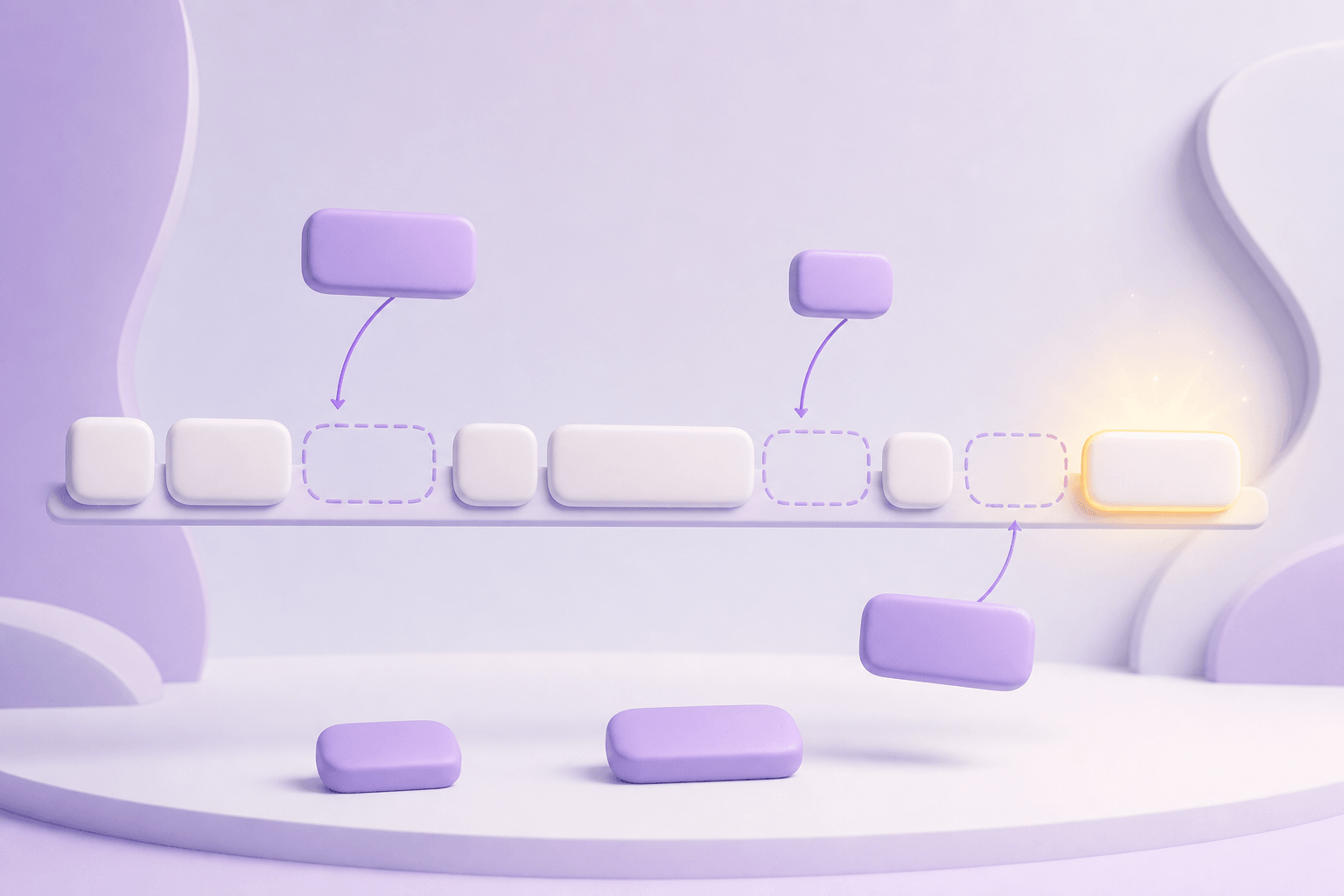
A word flashes on screen, then vanishes. Type it back — exactly. The ladder climbs from short words to two-word phrases, and the flashes get quicker as you go.
Free to play, no sign-up. Want to track your progress across six skills? The Axolumi app is coming to Google Play.
How to play Remember Words
- A word appears briefly in the center of the screen. Read it carefully — it won't stay long.
- When it disappears, type it from memory and check your answer. Spelling counts, so "recieve" for "receive" is a miss.
- Each correct answer shortens the next flash a little.
- Two correct in a row moves you up the ladder: short words, then longer words, then pairs like "quiet river", then two long words together.
- Two misses end the session. Your result shows how far up the ladder you climbed.
What Remember Words trains
- Memory · 60%
- Language · 25%
- Reading · 15%
This game works your verbal working memory — the system that holds words in mind between reading them and using them. Because you have to type the word back rather than pick it from a list, it demands production recall: reconstructing the whole word, letter by letter, instead of just recognizing it. That's a meaningfully harder ask, and it's why a word you'd recognize instantly can still slip away when the screen goes blank.
The spelling requirement pulls language processing into the loop too. To reproduce "altitude" exactly, you have to encode its structure, not just its meaning — which is close to what happens when you learn vocabulary in a new language. To be straight with you: practising this makes you better at holding and reproducing words, and it's a genuinely useful drill for spelling and vocabulary work. We make no grander claims than that.
Tips to improve
- Read the word as sound, not just shape. Hearing "quiet river" in your head gives you a second memory trace to type from.
- For long words, grab the skeleton first — beginning, ending, and roughly what's in between — then let your fingers fill in the rest.
- On word pairs, link the two into a quick mental image. A quiet river is easier to keep than "quiet" plus "river".
- Type at your natural pace. Rushing produces typos, and a typo costs the same as a blank.
Frequently asked questions
Yes — the game asks for an exact match, ignoring capitals and extra spaces. That's a deliberate choice: typing the word back exactly is what makes this production recall rather than simple recognition, and it's what gives the game its language training value.
Difficulty climbs through four rungs: one short word, one longer word, an adjective-noun pair like "quiet river", and finally two longer words together. Two correct answers in a row move you up a rung; the display time also tightens with every correct answer.
Recognition is picking the right word from options — your brain only has to match. Recall is producing the word from nothing, which takes a stronger memory trace. Typing from memory forces recall, which is why this game feels harder than a multiple-choice quiz and why it's better practice.
The mechanic — see a word, hold it, reproduce it exactly — mirrors how vocabulary drills work, and it exercises the same verbal memory you lean on when learning new words. It won't teach you a language by itself, but it trains a skill language learning relies on.
A minute or two, typically. There's no timer — the session ends after two misses, so it lasts exactly as long as your streak does.